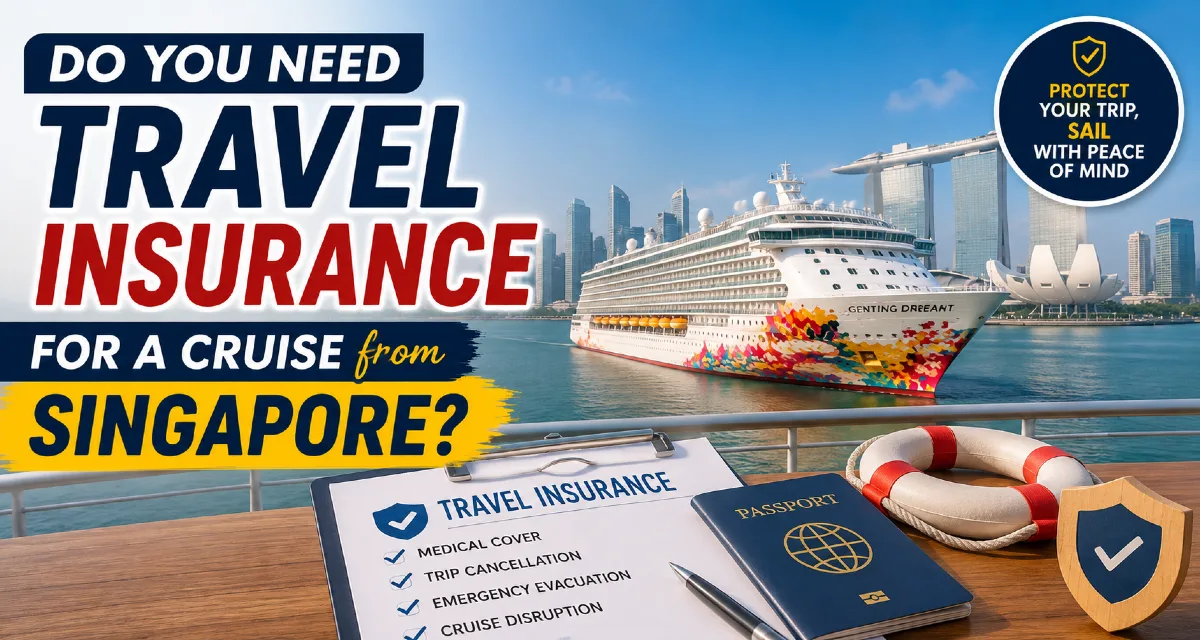
Short answer: no, travel insurance isn't legally required to board the Genting Dream — but skipping it is one of the biggest financial risks you can take on a cruise. Here's the number that changes minds: an emergency medical evacuation at sea can cost anywhere from US$25,000 to over US$100,000, and a cruise ship's medical centre only handles minor issues before sending you ashore. This guide explains, honestly and specifically, when you genuinely need cover, what a cruise policy must include, the real providers to look at in Singapore, Malaysia, India, Australia and Indonesia, and how to avoid paying for cover you don't need.
New to cruising? Pair this with our first-time cruiser guide and the honest cost breakdown so your budget includes everything before you sail.
Do you actually need it? An honest answer
Cruise lines sailing from Singapore generally recommend travel insurance rather than strictly require it — though some long-haul or international itineraries set minimum medical cover rules, so always check your specific sailing's advisory. Legally optional isn't the same as sensible, though. You should treat insurance as essential if:
- You've pre-paid a significant amount (cabin, flights, excursions) that you'd lose if you had to cancel
- Anyone travelling has a pre-existing medical condition or is older
- Your itinerary includes ports or longer sailings to Malaysia, Thailand, Bali or beyond
- You're travelling with children or elderly parents
The only time you might reasonably skip it: a young, healthy solo traveller on a cheap 2-night Cruise to Nowhere with nothing pre-paid to lose. Even then, one medical incident at sea can dwarf the tiny premium. For most people, the maths is overwhelmingly in favour of buying.
The mistake that voids everything: you must buy travel insurance before you depart — usually before you leave your home country. Buying mid-cruise is invalid, and a policy purchased after you've left is typically void. Sort it when you book, not the night before.
Why a regular travel policy may not be enough
This is the single most misunderstood point, and it's where people get burned. A standard travel policy is built for flights-and-hotels holidays. Cruises carry risks a basic plan often doesn't name or cover:
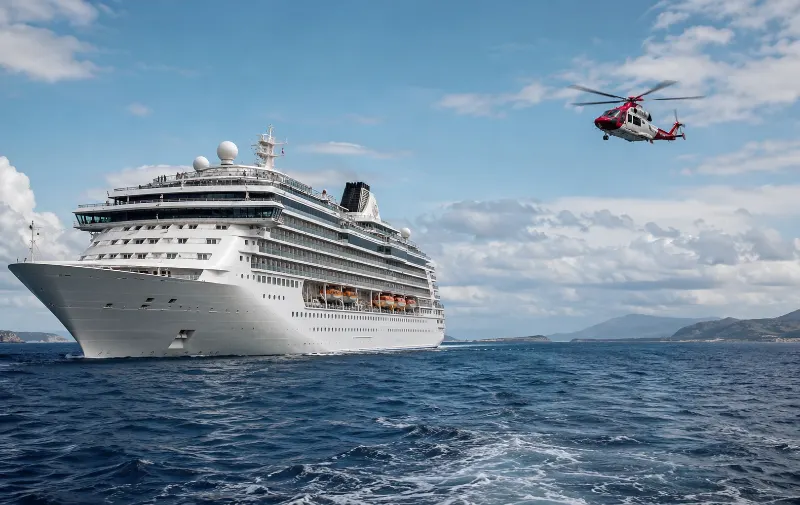
- Emergency medical evacuation at sea — airlift from ship to shore, the big one financially
- Missed port departure — if you miss the ship and must reach the next port
- Cabin confinement — compensation if you're quarantined to your cabin by the ship's doctor
- Missed port of call / itinerary changes — when weather or mechanical issues skip a stop
- Shipboard accidents and cover during extended sea days
Many basic plans don't even mention "cruise" or "cruise-to-nowhere" in their wording — and if it isn't named, it may not be covered. You need either a cruise-specific policy or a standard plan with a cruise add-on / cruise benefit rider.
What good cruise travel insurance must cover
Whatever provider you choose, check the policy names these. Use this as your checklist:
- Emergency medical treatment — onboard doctor visits, hospitalisation at port (look for a high limit; sea rescues are expensive)
- Emergency medical evacuation & repatriation — ideally six figures or "unlimited"; this is the benefit that saves you from a catastrophic bill
- Trip cancellation & curtailment — recovers pre-paid, non-refundable costs if you cancel or cut short for a covered reason
- Cruise disruption benefits — missed port departure, missed port of call, cabin confinement, itinerary change
- Baggage loss / delay — including between ports
- Pre-existing conditions — only if declared and covered (often needs a rider)
- COVID-19 cover — many plans now include overseas medical, cancellation and quarantine; confirm limits
- 24/7 emergency assistance — a real hotline that arranges help
Common exclusions to know upfront (so a claim isn't rejected): pre-existing conditions without a rider, claims linked to alcohol or drug intoxication, reckless or illegal acts, and uncertified or extreme activities (e.g. scuba diving outside safe limits). If you plan adventurous shore excursions, add a sports/adventure rider.
Individual, family, annual or corporate — which plan type?
Match the plan to who's travelling — this is where people over- or under-buy:
- Single-trip (individual): best for a one-off cruise. Simple and cheapest for occasional travellers.
- Family plan: covers you, your spouse and children on one policy — usually far cheaper than insuring each person separately. Ideal for a family cruise.
- Annual multi-trip: if you travel more than 2–3 times a year, an annual policy typically pays for itself and covers every trip, not just this cruise.
- Corporate / business travel insurance: for companies whose staff travel — including incentive cruises or MICE sailings. These cover multiple employees under one master policy, add business-equipment and trip-liability cover, and are worth arranging directly with the insurer's corporate desk for a tailored quote.
Real providers by country (your starting shortlist)
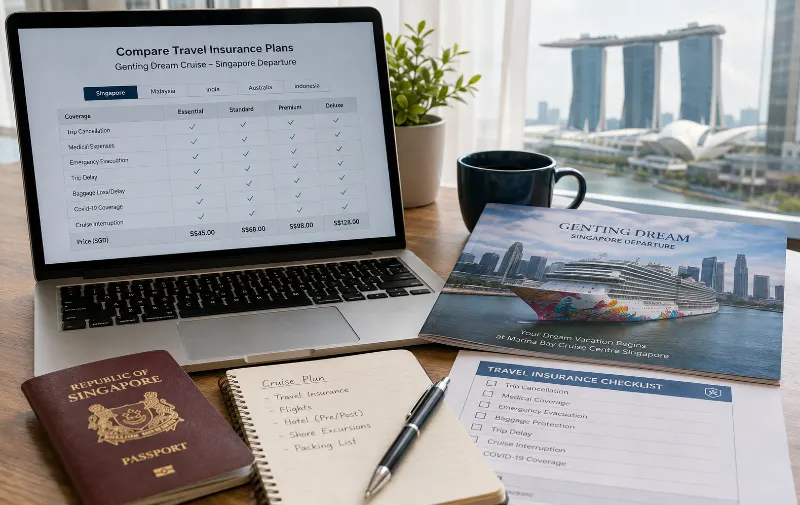
Because our readers sail from across the region, here are established, regulated insurers offering cruise-capable travel cover in each market. Always compare current plans and read the wording — this is a starting point, not a recommendation of a specific policy.
Singapore
UOB InsureCruise (a dedicated cruise policy), MSIG TravelEasy (high evacuation limits, travel-agent insolvency cover), HL Assurance, Income, AIG Travel Guard (with a Cruise Vacation Benefit rider) and Allianz. Typical cruise cover runs roughly S$25–60 for a short 3-day sailing, depending on age and options.
Malaysia
Regulated by Bank Negara Malaysia: Allianz, Etiqa, Tune Protect, MSIG, Tokio Marine and Chubb. Takaful (Shariah-compliant) travel plans are also available with comparable coverage — a good fit if you'd prefer an Islamic-finance product for your halal cruise.
India
IRDAI-regulated insurers with strong claim-settlement records: ICICI Lombard (offers cruise cover add-ons), Tata AIG, Bajaj Allianz, HDFC ERGO and Reliance General. Buy within about 15 days of booking to keep pre-departure cancellation protection, and check the medical sub-limits, not just the headline sum.
Australia
Allianz, Cover-More (now part of Zurich, which owns Travel Guard), and value options like Zoom. Australian cruise cover is usually a specific add-on — make sure "cruise" is selected, as Pacific and Asia cruise sailings need it explicitly.
Indonesia
Allianz, Zurich and Chubb offer international travel plans suitable for cruising; confirm the plan names cruise cover and medical evacuation before you buy.
Global comparison tip: marketplaces like Squaremouth, InsureMyTrip and PolicyBazaar (India) let you compare many insurers side by side in one search. And skip the cruise line's own add-on if you can — it's often the most expensive and most limited option compared with a third-party cruise policy.
How much should it cost?
As a rule of thumb, comprehensive cruise travel insurance runs about 5–10% of your total trip cost. For a short Singapore cruise that can be as little as S$25–60 per person; for a longer, pricier sailing with flights and excursions, expect more. Weigh that against a five-figure evacuation bill and it's one of the cheapest forms of peace of mind you'll buy.
Quick checklist before you buy
- Confirm the policy names "cruise" or "cruise-to-nowhere" in its wording.
- Check emergency medical evacuation is a high or unlimited limit.
- Ensure cruise disruption (missed port, cabin confinement) is included.
- Declare pre-existing conditions and add a rider if needed.
- Add an adventure/sports rider if you'll do active excursions.
- Buy before you leave home, ideally right after booking.
- Save the policy number and 24/7 assistance line on your phone and a printout.
The bottom line
You can legally cruise from Singapore without travel insurance — but you shouldn't. For the price of a nice dinner, a proper cruise-specific policy protects you from the two things that genuinely wreck a holiday budget: a medical evacuation at sea and a cancelled trip you've already paid for. Match the plan type to your group, make sure "cruise" is named in the wording, buy before you sail, and you can relax and enjoy the ship.
Planning your Genting Dream sailing and want help lining up the right cabin and dates so you know exactly what to insure? Tell us your plans — we'll send a live quote and honest advice, usually within the hour.
This article is general information, not financial or insurance advice. Coverage, limits, exclusions and prices vary by insurer, plan and country, and change over time. Always read the policy wording and confirm current details with the provider before purchasing.
More from the blog
View all →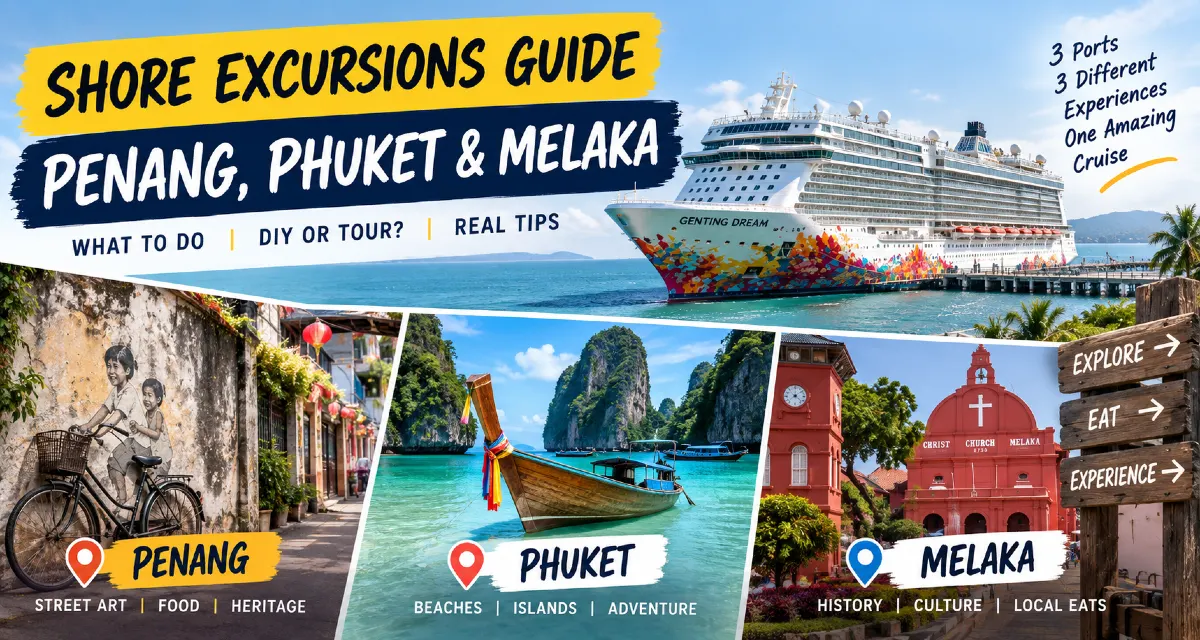 Cruise Tips
Shore Excursions Guide: Penang, Phuket & Melaka
12 Sep 2026 · 11 min read
Cruise Tips
Shore Excursions Guide: Penang, Phuket & Melaka
12 Sep 2026 · 11 min read
 Cruise Tips
Multi-Currency & Forex for a Cruise: Cards, Cash & Fees
10 Sep 2026 · 10 min read
Cruise Tips
Multi-Currency & Forex for a Cruise: Cards, Cash & Fees
10 Sep 2026 · 10 min read
 Cruise Tips
Best Travel Credit Card for a Cruise (Miles, Cashback & FX Fees)
7 Sep 2026 · 10 min read
Cruise Tips
Best Travel Credit Card for a Cruise (Miles, Cashback & FX Fees)
7 Sep 2026 · 10 min read
 Cruise Tips
Cheapest Way to Book Genting Dream (Klook vs Direct vs Agent)
31 Aug 2026 · 11 min read
Cruise Tips
Cheapest Way to Book Genting Dream (Klook vs Direct vs Agent)
31 Aug 2026 · 11 min read
 Cruise Tips
Halal Cruise from Singapore: Food, Prayer & What to Expect
23 Aug 2026 · 10 min read
Cruise Tips
Halal Cruise from Singapore: Food, Prayer & What to Expect
23 Aug 2026 · 10 min read
 Cruise Comparison
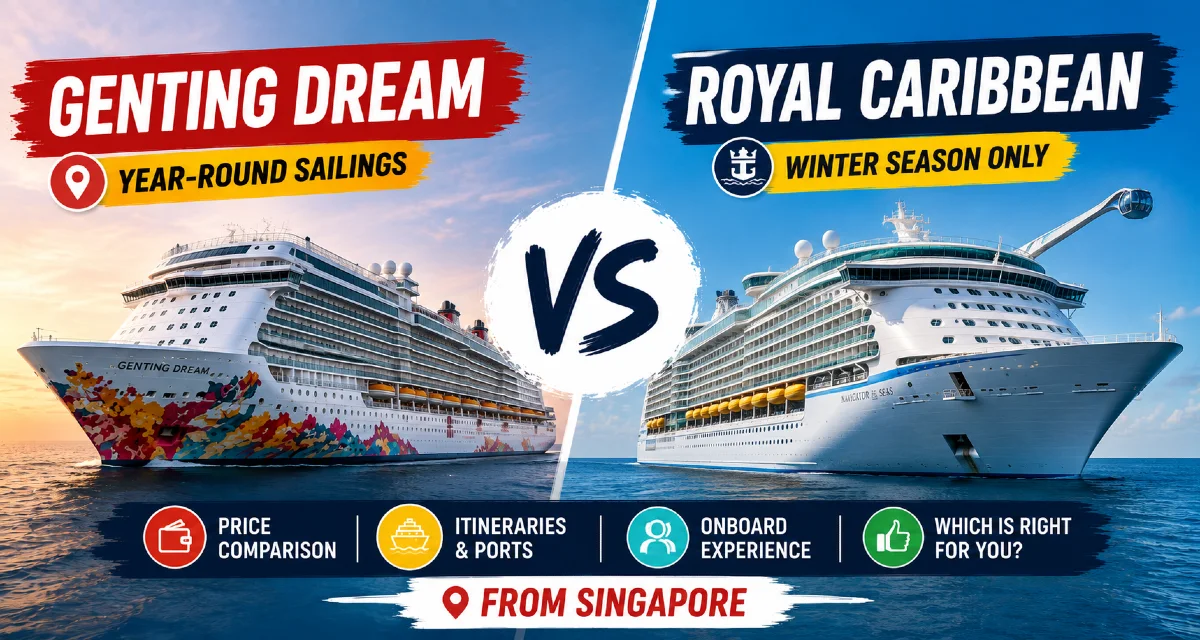
Genting Dream vs Royal Caribbean from Singapore
21 Aug 2026 · 11 min read
Cruise Comparison
Genting Dream vs Royal Caribbean from Singapore
21 Aug 2026 · 11 min read
Ready to book your Genting Dream cruise?
Tell us your dates and cabin preference — we'll send a live quote, usually within the hour.
← Back to all guides