
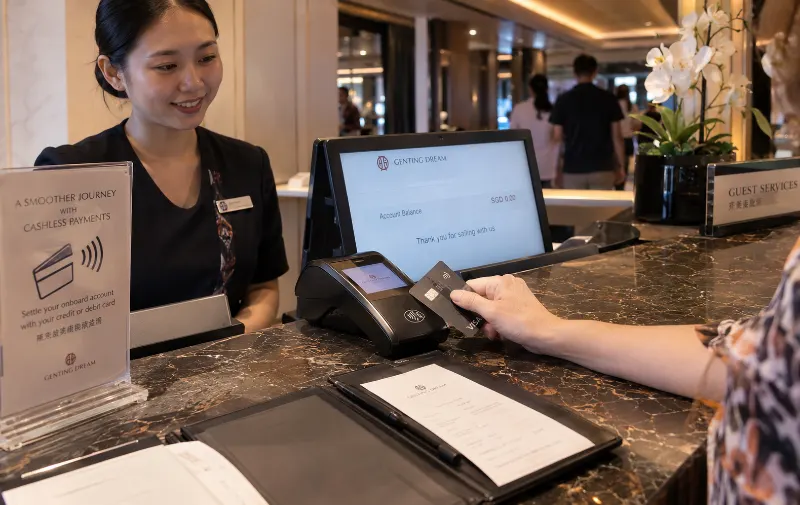
Here's a detail most cruisers miss: the Genting Dream is fully cashless, so almost everything you spend onboard — drinks, specialty dining, the spa, shore excursions, shopping — lands on one card at the end of the sailing. Add the fare itself and your port-day spending, and a cruise is exactly the kind of concentrated travel spend where the right credit card quietly earns you a free night, a lounge visit or real cashback — or, with the wrong card, silently charges you a 3%+ foreign-exchange fee on everything. This guide explains what actually matters for a cruise card, and names real options for travellers from Singapore, Malaysia, India, Australia and Indonesia. No hype — just what to look for and why.
First time cruising? Pair this with our honest cost breakdown so you know exactly what you'll be charging to that card, and the cheapest way to book guide, where a card promo can stack on top of your fare.
Why your card choice matters more on a cruise
Two things make cruises different from a normal holiday for card purposes:
- The spend is concentrated and card-based. Because the ship is cashless, your entire onboard account is settled to one card. That's a big, single hit of spending — ideal for hitting a sign-up bonus minimum or racking up miles in one go.
- You're spending across currencies. Your fare may be in SGD, onboard is in SGD, but port days in Penang, Phuket or Bali mean Ringgit, Baht and Rupiah. If your card charges a foreign-transaction (FX) fee, it applies to all of that non-home-currency spend — typically 3% to 3.5%, which quietly adds up.
The silent 3% tax: most everyday travel cards charge an FX fee of around 3.25% on overseas and foreign-currency transactions. On a family cruise with a few thousand dollars of fare and onboard spend, that's real money. Either pick a card that waives FX fees, or make sure the miles/cashback you earn clearly beats the fee.
What to actually look for in a cruise card
Ignore the marketing and judge a card on these five things:
- Foreign-transaction fee: 0% is ideal. If it charges ~3.25%, your rewards must beat that to come out ahead.
- Earn rate on travel/overseas spend: measured in miles per dollar (or "miles per ringgit"/cashback %). Overseas rates are often higher than local.
- Miles vs cashback: miles suit frequent flyers who'll redeem for flights; cashback is simpler and always useful. Pick the one you'll actually use.
- Complimentary travel insurance: many premium cards include cover when you charge the trip to the card — but confirm it names cruise travel (see our cruise insurance guide).
- Perks that fit a cruise: airport lounge access (if you're flying in), no annual fee or an easy fee waiver, and a sign-up bonus you can hit with the fare.
Miles or cashback — which for a cruise?
This is the fork in the road. Here's the honest rule of thumb:
- Choose a miles card if you fly a few times a year, especially to join or extend cruises, and you'll actually redeem miles for flights or upgrades. Miles can be worth more than cashback if redeemed well — and wasted if they expire.
- Choose a cashback (0% FX) card if you want simplicity, don't chase flights, or the cruise is a one-off. Cashback on a fee-free card is a guaranteed, no-expiry saving on every dollar.
For a Singapore weekend cruiser who rarely flies, a fee-free cashback card often beats a miles card once you subtract the FX fee. For a frequent regional traveller, a strong miles card wins.
Real options by country (examples, not recommendations)
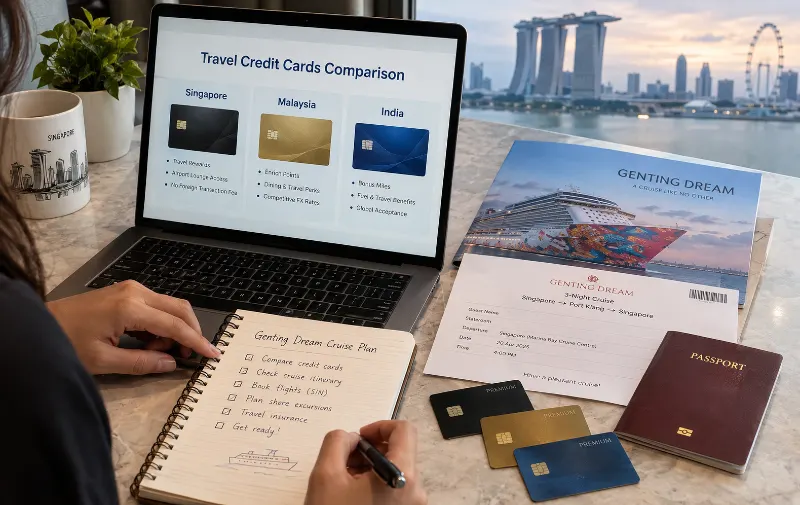
These are established, widely available cards that fit cruise spending in each market. Always compare current terms, fees and earn rates before applying — cards change constantly, and the best one depends on your income, spending and whether you value miles or cashback.
Singapore
For 0% FX + cashback: the Trust Cashback Card and UOB EVOL waive the usual 3–3.5% FX fee and give cashback on overseas spend — great for cruise-only or infrequent flyers. For miles: the UOB PRVI Miles (up to ~3 miles/$1 overseas), Citi PremierMiles, HSBC TravelOne and OCBC 90°N earn strong overseas miles and add lounge access and travel insurance, though most carry a ~3.25% FX fee. Frequent SIA flyers may prefer a KrisFlyer-linked card.
Malaysia
Regulated by Bank Negara. Strong travel/miles options include Maybank World Elite Mastercard and the Maybank SIA KrisFlyer Amex, plus travel cards from Alliance, CIMB, HSBC and AmBank. Look at the Miles Per Ringgit (MPR) and whether points convert to Enrich, KrisFlyer or Asia Miles. Some cards reduce or waive the bank's FX mark-up on overseas spend — valuable for port days.
India
Popular travel/forex-friendly cards come from HDFC, ICICI, Axis, SBI Card and American Express. Indian cards usually carry a markup of ~2–3.5% on foreign spend plus GST, so travellers often pair a card with a forex/travel card or multi-currency account for port spending (more on that in our forex guide, below). Check for lounge access, air-mile transfer partners, and the exact forex markup before you rely on a card abroad.
Australia & Indonesia
Australia: look for a no-FX-fee travel card (several major banks and challengers offer them) or a strong Qantas/Velocity points earner if you fly often. Indonesia: premium travel cards from major banks offer airline-point earning; confirm the foreign-currency markup, which can be significant, before using the card ashore.
A smart combo many cruisers use: a miles card for the big fare payment (to earn a chunk of miles or hit a sign-up bonus), plus a 0% FX card or multi-currency card for port-day spending in local currency. Best of both — rewards on the large spend, no FX fee on the small daily stuff.
How to actually maximise a cruise on your card
- Charge the fare to a card with a sign-up bonus you can hit with that single payment — cruise fares are large enough to unlock many bonuses.
- Set the onboard account to your rewards card at check-in so all onboard spend earns too.
- Always pay in local currency, never "in SGD/your home currency" when a port terminal or shop offers the choice — "dynamic currency conversion" adds a poor exchange rate on top. Decline it.
- Use a 0% FX card (or forex card) for port days to avoid the 3%+ fee on Ringgit/Baht/Rupiah spend.
- Clear the balance in full — card interest (often 26–29% p.a.) instantly wipes out any rewards. Never carry a balance to chase miles.
- Check your travel-insurance perk covers cruising before relying on it; top up with a dedicated policy if not.
The one rule that overrides everything: rewards only make sense if you pay the card off in full. At ~27% interest, one month of carried balance costs more than a year of miles is worth. A cruise card is a tool for people who clear their statement every month.
The bottom line
Because a cruise concentrates a big, card-settled spend across several currencies, the right card genuinely pays you back — and the wrong one taxes you 3%+ without you noticing. Keep it simple: if you fly often and redeem miles, use a strong miles card for the fare and a fee-free card for ports; if you don't, a single 0% FX cashback card is the cleanest win. Always pay in local currency, decline dynamic conversion, and clear the balance in full. Do that and your Genting Dream cruise effectively funds a little of your next one.
Ready to plan the sailing you'll be putting on that card? Tell us your dates and group — we'll find the best-value cabin and fare, and lay out the real all-in cost, usually within the hour. Next reads: our cruise travel-insurance guide and the first-time cruiser guide.
This article is general information, not financial advice. Card features, fees, earn rates and eligibility vary by issuer and country and change often. Always read the current terms and confirm details with the card provider before applying or relying on any benefit.
More from the blog
View all → Cabins & Suites
Genting Dream Palace Suite Review — Is Ship-Within-a-Ship Worth It?
5 Oct 2026 · 12 min read
Cabins & Suites
Genting Dream Palace Suite Review — Is Ship-Within-a-Ship Worth It?
5 Oct 2026 · 12 min read
 Cruise Tips
Genting Dream Entertainment & Shows Guide (Zodiac Theatre, Zouk)
2 Oct 2026 · 12 min read
Cruise Tips
Genting Dream Entertainment & Shows Guide (Zodiac Theatre, Zouk)
2 Oct 2026 · 12 min read
 Cruise Tips
Genting Dream Casino Guide: Games, Rules & Tips
30 Sep 2026 · 9 min read
Cruise Tips
Genting Dream Casino Guide: Games, Rules & Tips
30 Sep 2026 · 9 min read
 Cruise Tips
Best Time to Book a Genting Dream Cruise (Cheapest Months & Deals)
27 Sep 2026 · 10 min read
Cruise Tips
Best Time to Book a Genting Dream Cruise (Cheapest Months & Deals)
27 Sep 2026 · 10 min read
 Cruise Tips
Genting Dream with Kids: The Honest Family Cruise Guide
23 Sep 2026 · 12 min read
Cruise Tips
Genting Dream with Kids: The Honest Family Cruise Guide
23 Sep 2026 · 12 min read
 Cruise Tips
Shore Excursions Guide: Penang, Phuket & Melaka
12 Sep 2026 · 11 min read
Cruise Tips
Shore Excursions Guide: Penang, Phuket & Melaka
12 Sep 2026 · 11 min read
Ready to book your Genting Dream cruise?
Tell us your dates and cabin preference — we'll send a live quote, usually within the hour.
← Back to all guides